Close
Type at least 1 character to search
Back to top

LESS FOR MORE - NEW STAR PRESS

An interactive platform for a publishing house

The design process stems from the overall concept of “less for more”. The implementation of new ways to use and experience the space is achieved with simple alterations of color, patterns and moving separation elements.

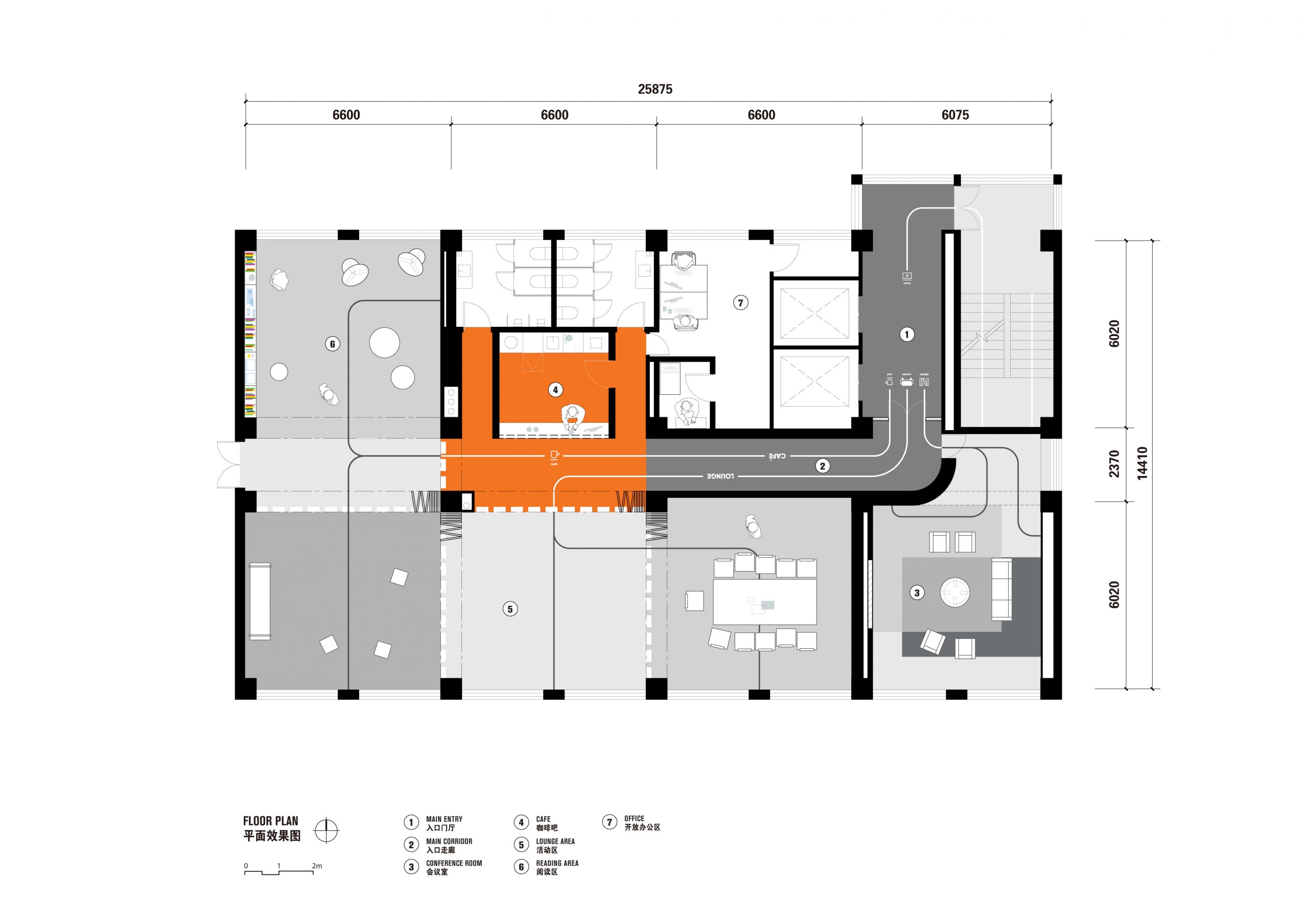
The new dynamic multifunctional hub for the New Star Press, transforms a traditionally private space, to an interactive and flexible one. Located on the sixth floor of the New Star Publishing House building on Chegongzhuang Street, Beijing, spanning approximately 300 square meters, the space serves as a social core for the next chapter of the company.
Created to be an interactive platform for a, traditionally closed publishing house, this space accommodates a wide array of programs, including a coffee bar, reading areas, as well as transformable spaces for book launches, and various social events. Despite the challenges posed by the building’s preexisting 1980s construction, a dense column grid, low ceilings, and a constrained usable area—Crossboundaries reimagined the space into a flexible and multifunctional environment. The design maximizes the space’s potential to host various activities, fostering a dynamic, creative atmosphere for social interaction.

Time Tunnel: Connecting Past and Future
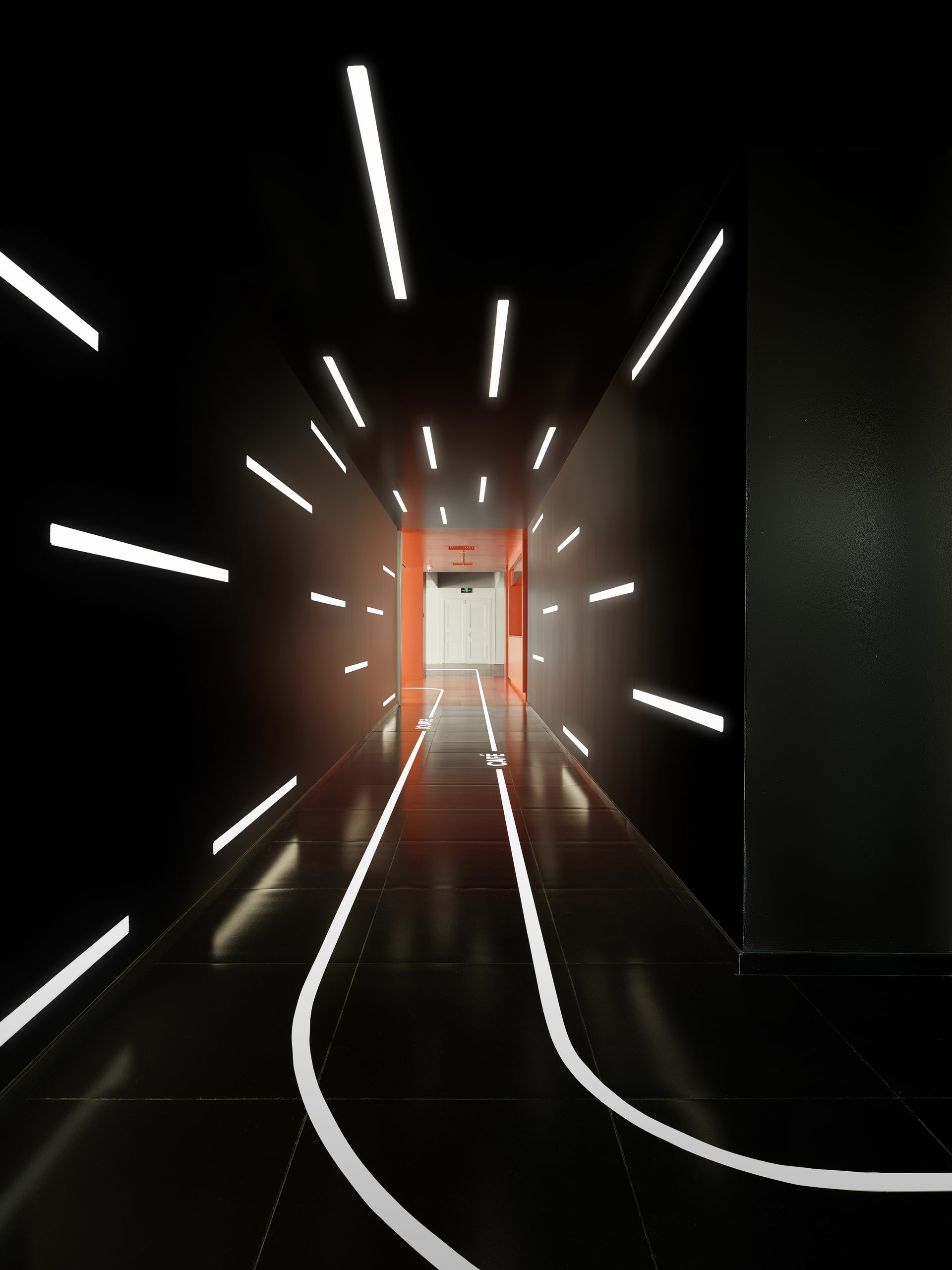
The visitor enters through a passage—a “time tunnel”, symbolizing the transition between history and the future. Drawing inspiration from New Star Publishing House’s logo, the design of the tunnel incorporates the brand identity with an abstraction of elements from Chinese calligraphy and stone inscriptions, evoking the company’s cultural heritage.
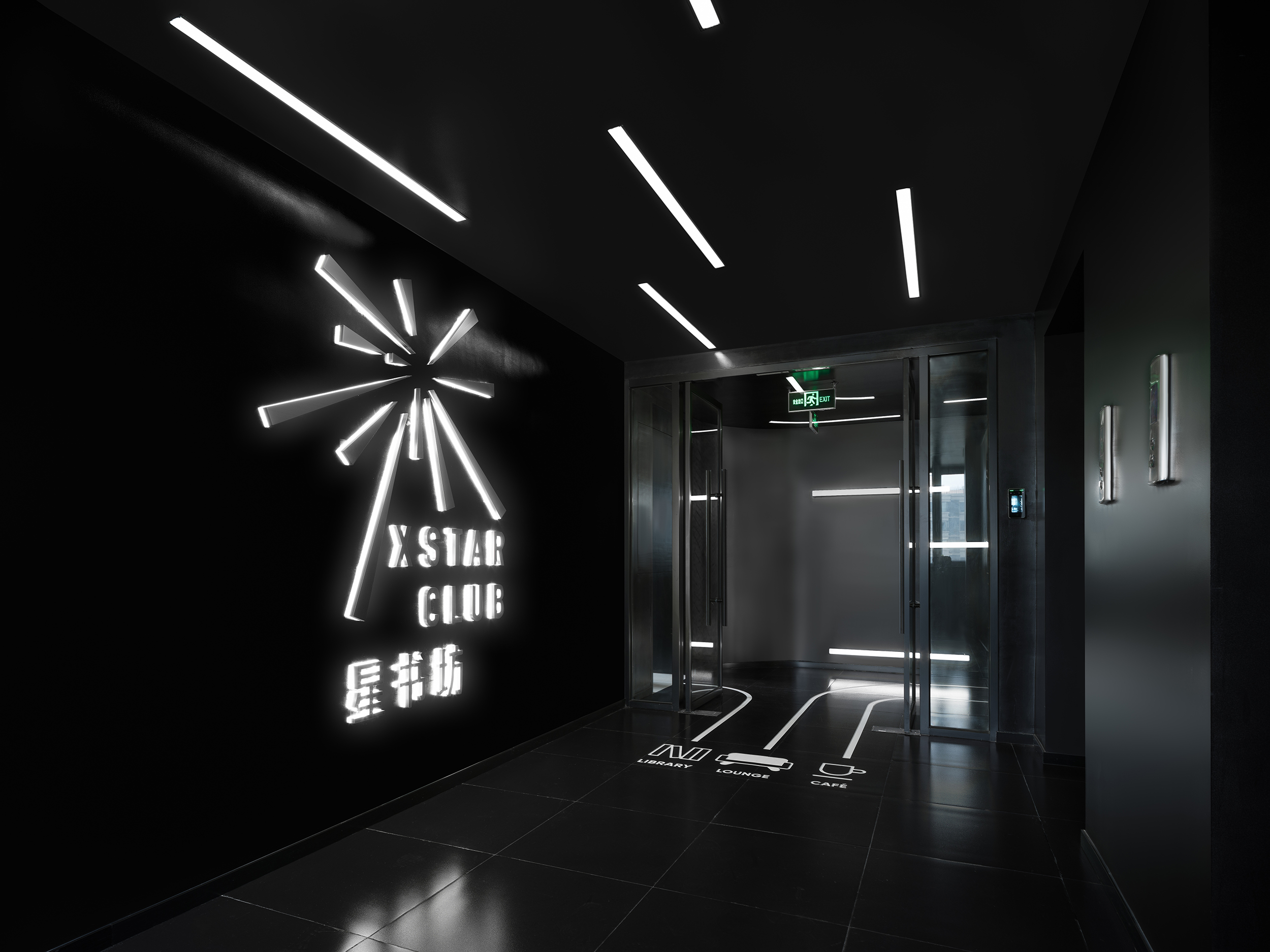
The logo of New Star Publishing House features a star-like shape with radiating lines, representing both innovation and endless possibilities. Crossboundaries transformed the logo into a three-dimensional experience that visually connects the past with the future.
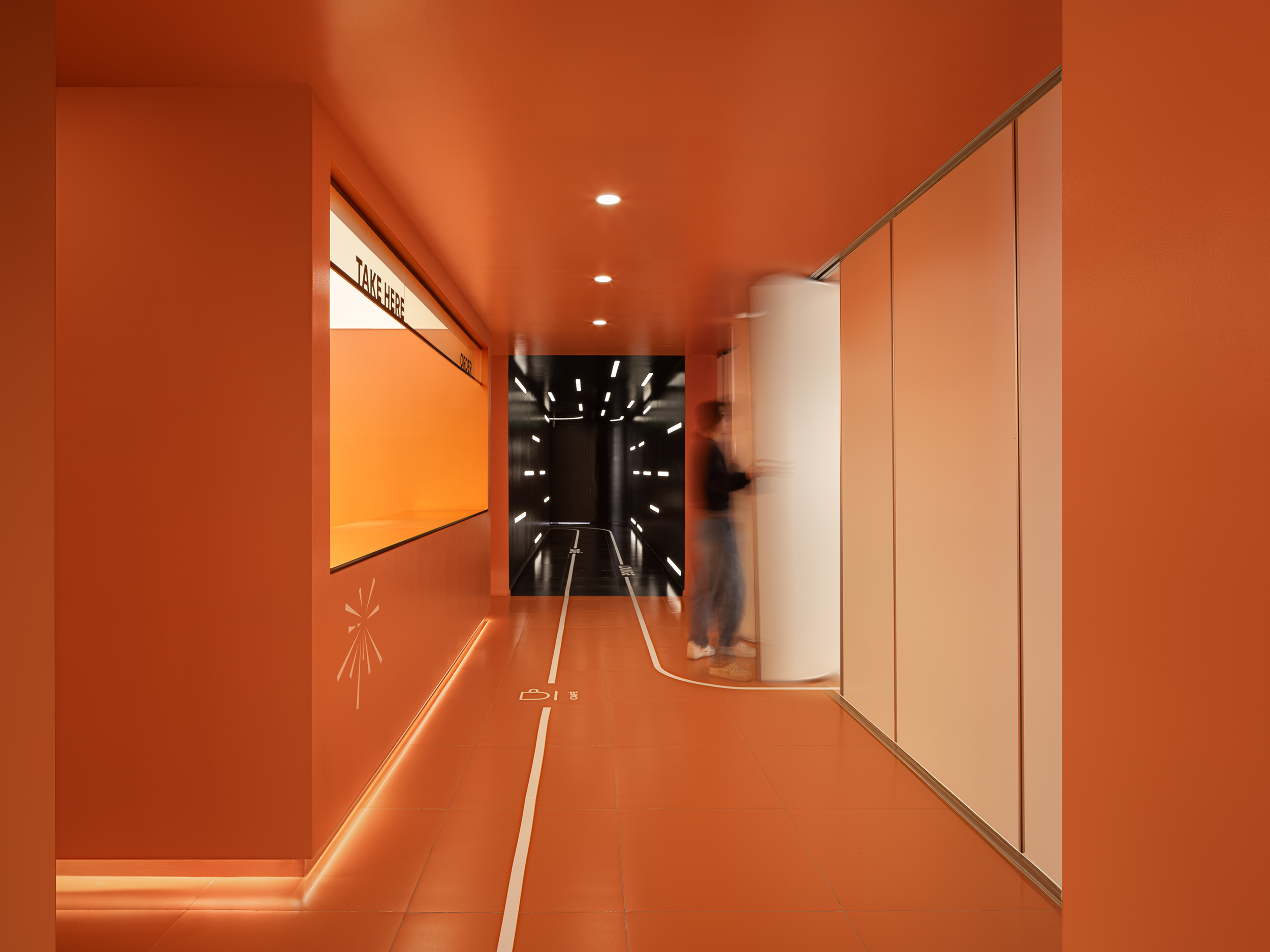
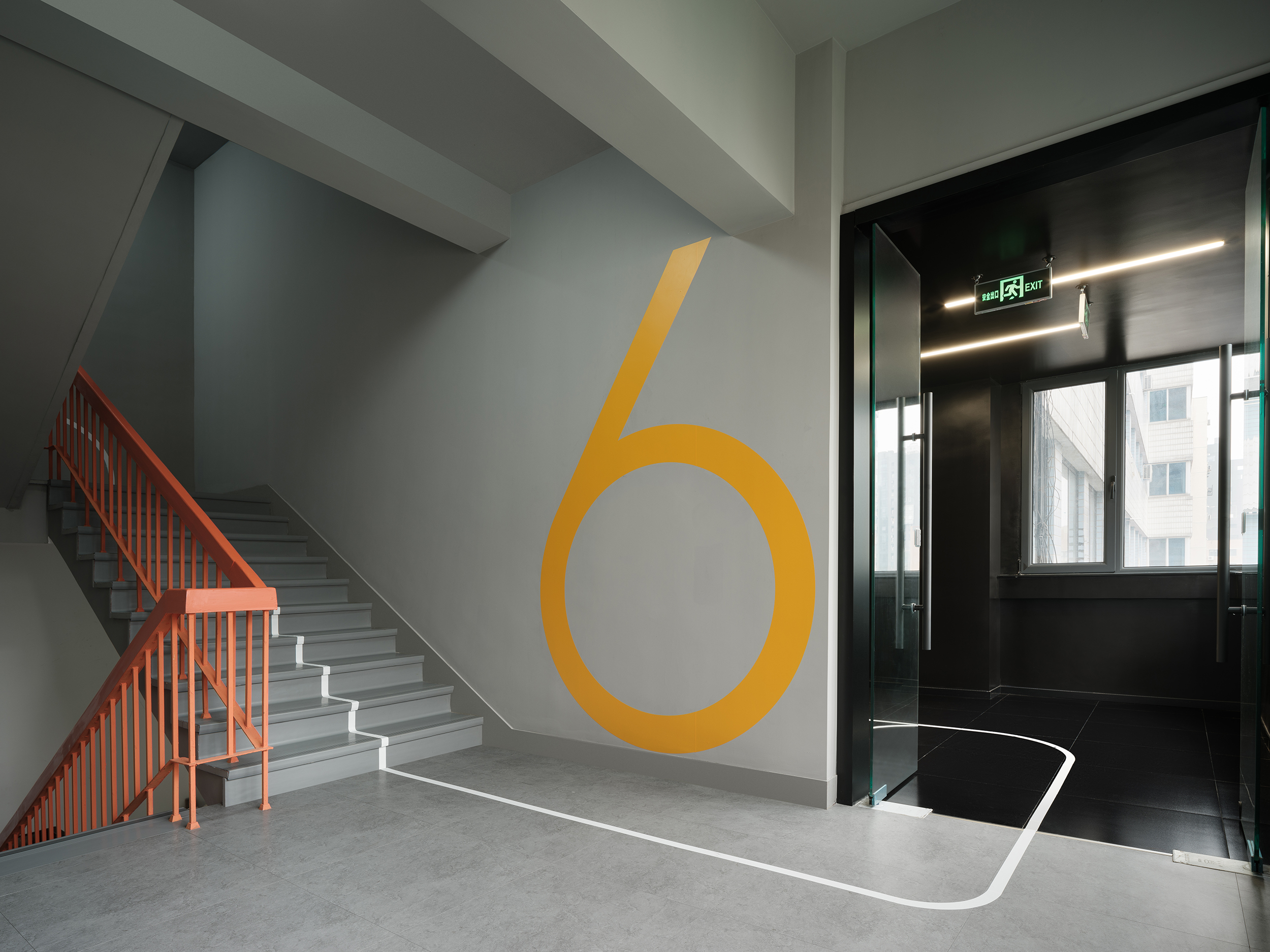
The “time tunnel” leads visitors from the elevator through a dark corridor, with subtly illuminated linear lights on walls and directing lines on the ground, arriving at the café, where the main space reveals itself.
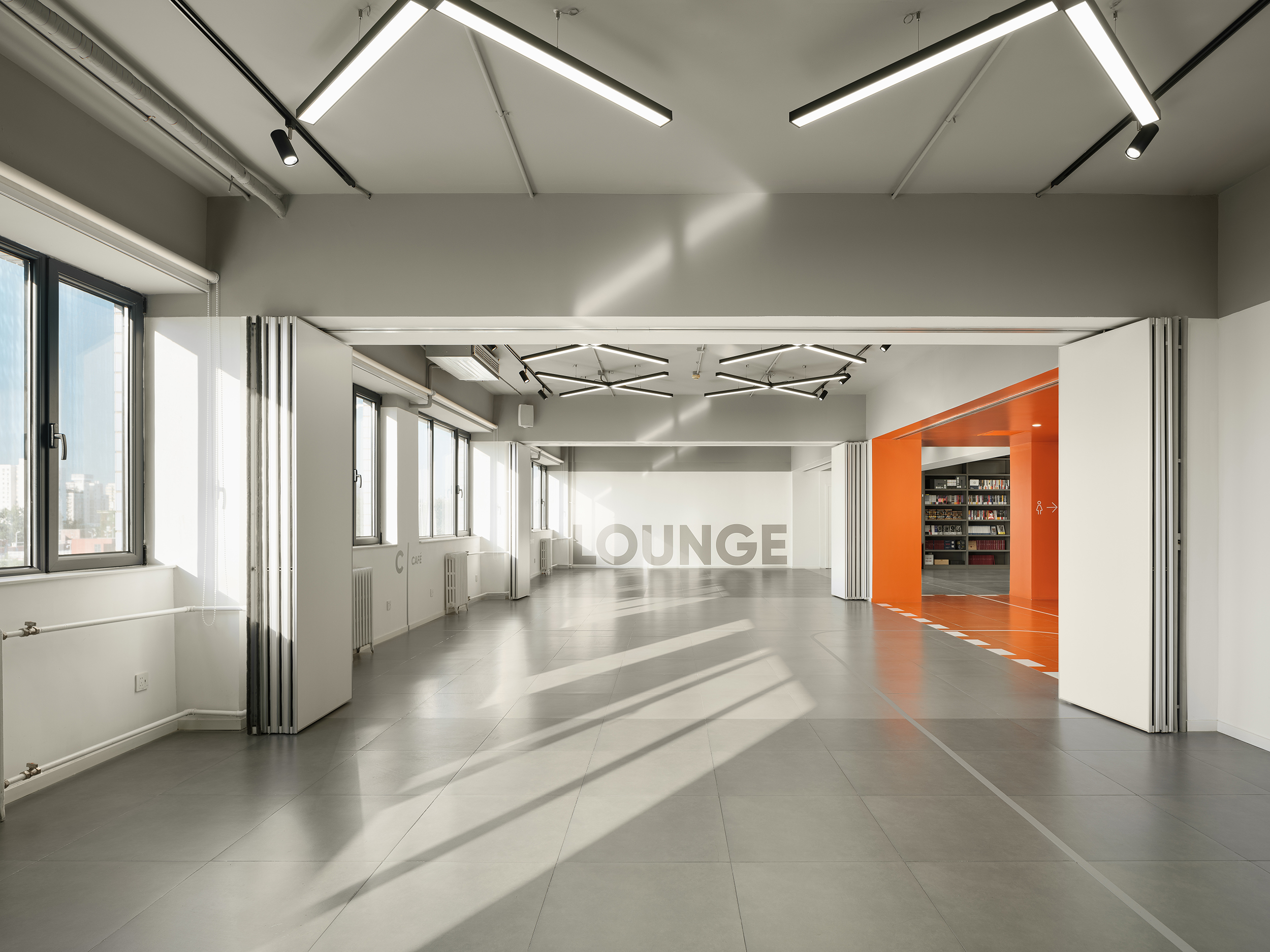
As the space opens up, it unveils a vibrant world of creativity, illuminated by ample natural lighting and light colors, juxtaposing with the muted dark tunnel. The passage acts as a bridge between tradition and modernity, providing an immersive experience that invites exploration and curiosity.
DATA

Project:  Creative Lounge for New Star Press
Client: New Star Press
Program: Office
Location: Haidian District, Beijing, China
Architecture area: 300 m2
Completion Date: Jan. 2025

CREDITS

Partners in Charge: Binke Lenhardt, DONG Hao
Lead ArchitectGAO Yang
Design team: ZHAO Yue, Ivan Chen, Erik Chen
Photographers: AN Ling

The Heart of the Space – a “pulsating” core
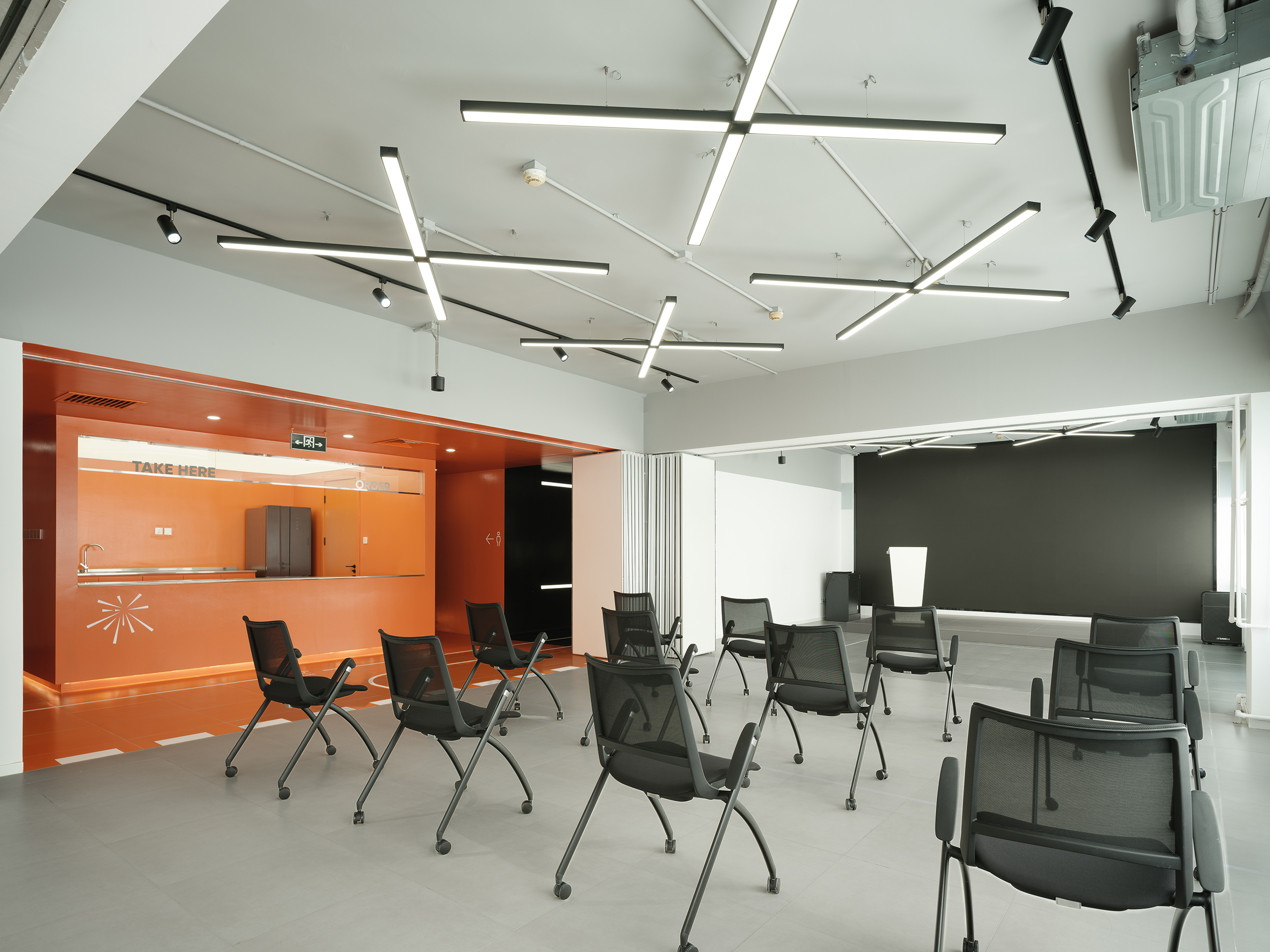
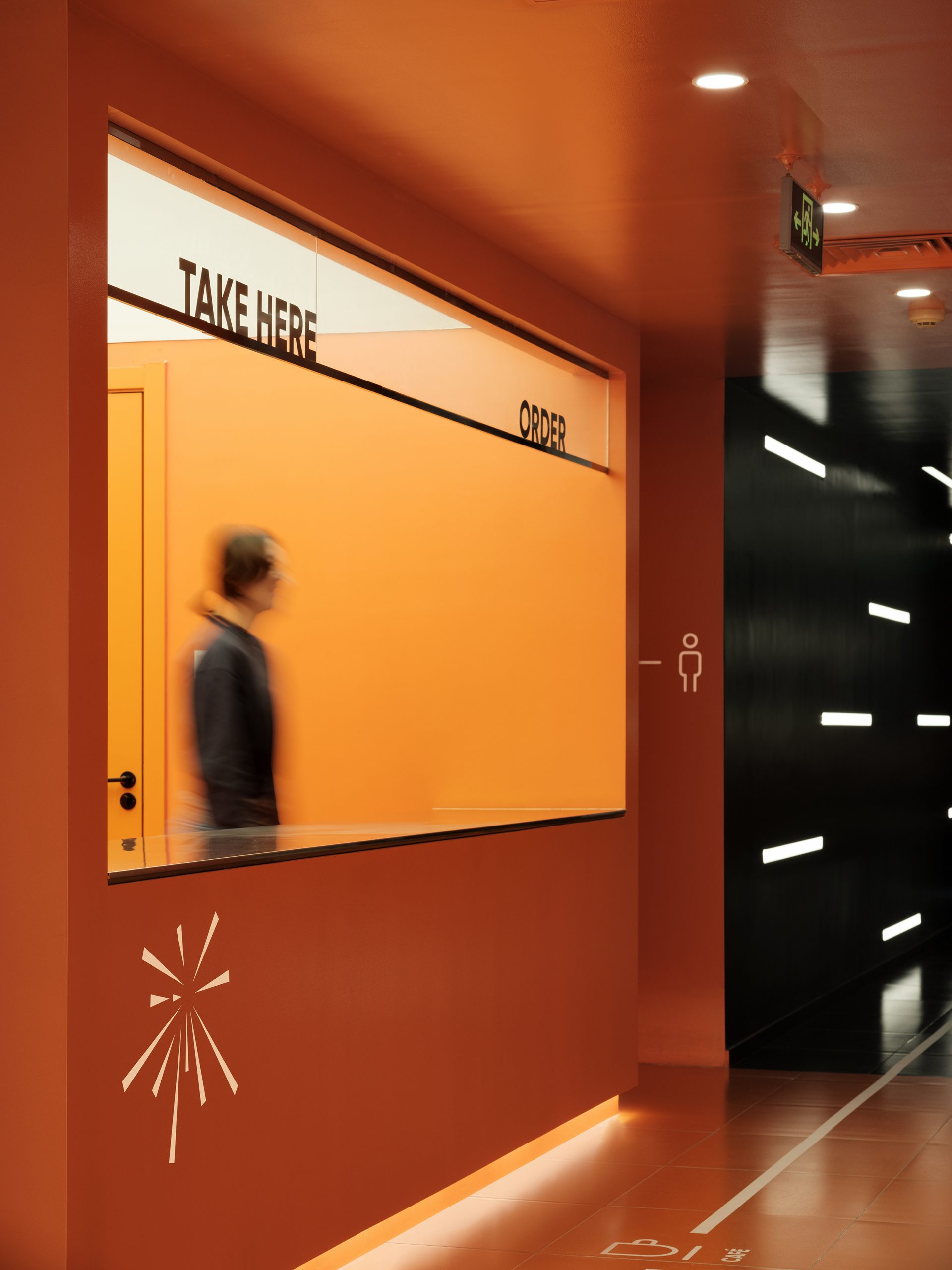
Emerging from the tunnel, visitors encounter the “core” of the space: a striking orange “pulsating center”, an embodiment of vitality and energy. This visual focal point serves as the functional center of the space in the form of a coffee bar. Positioned centrally, it serves as a gathering point for both casual social interactions and formal events. The vibrant orange contrasts with the surrounding black, white, and gray tones, anchoring it as the space’s dynamic visual highlight. The implementation of the centerpiece facilitates smooth interaction between the various zones, cementing the space as a hub for communication and social exchange.

Adaptable Layouts for Every Need
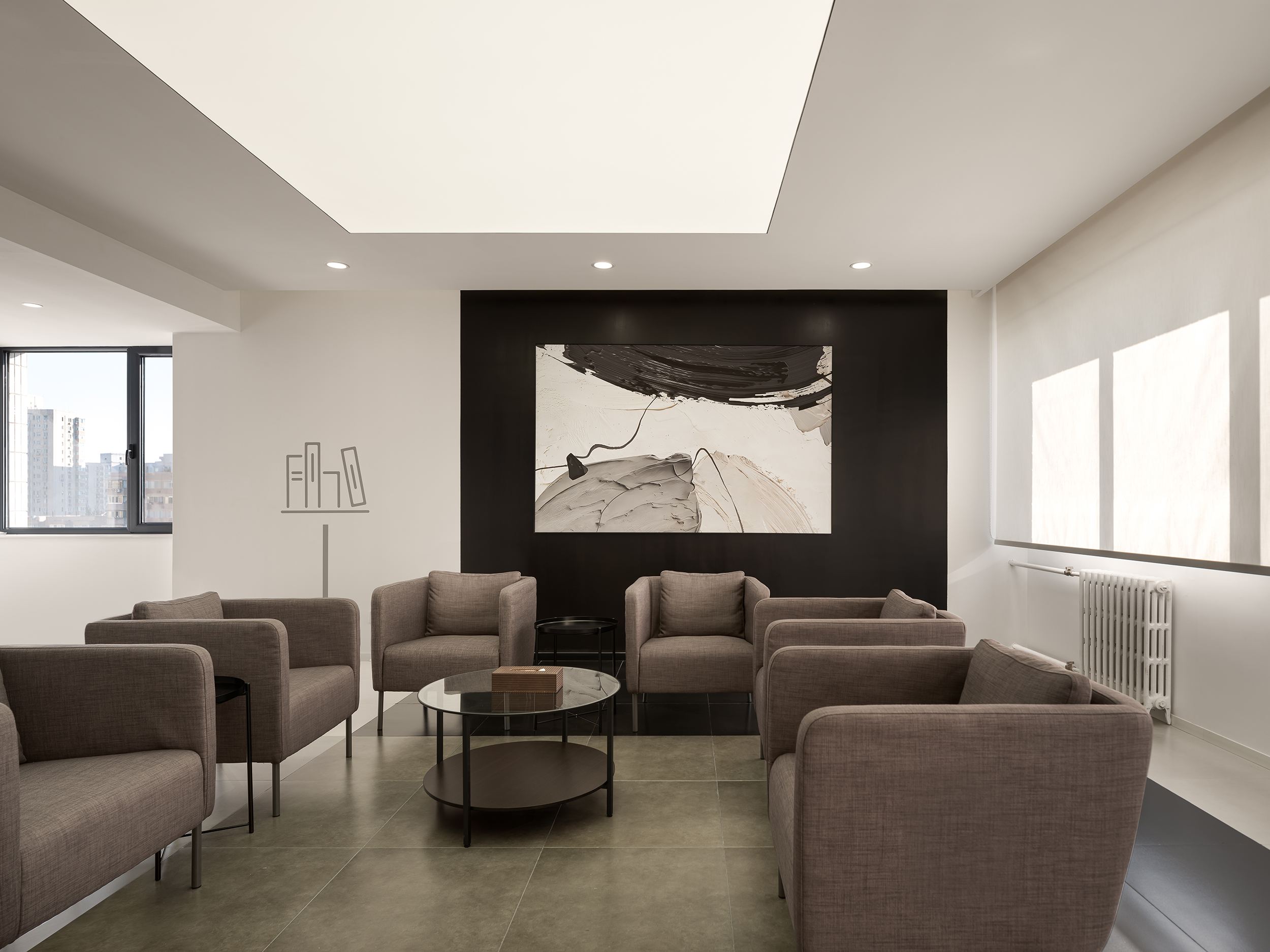
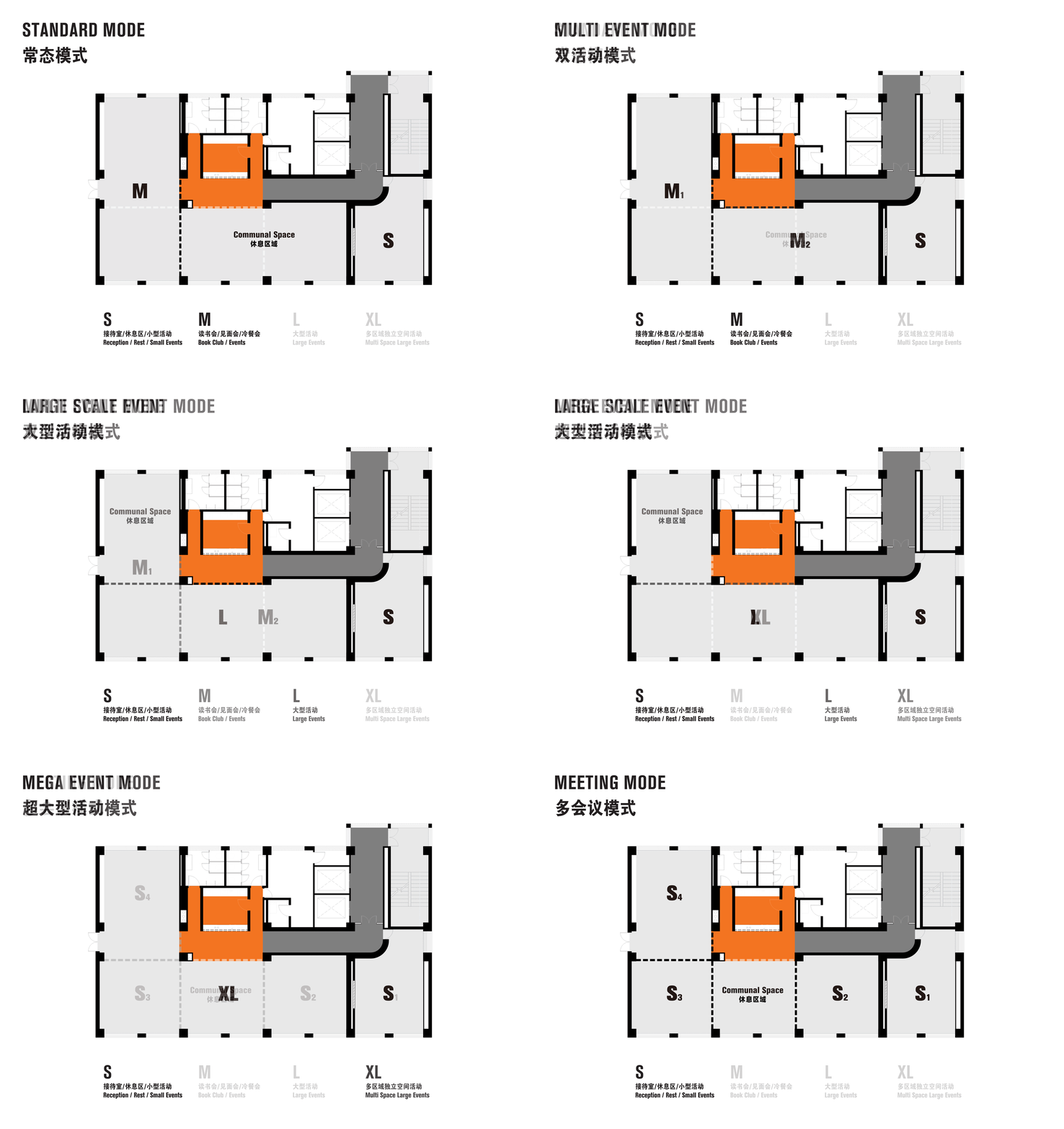
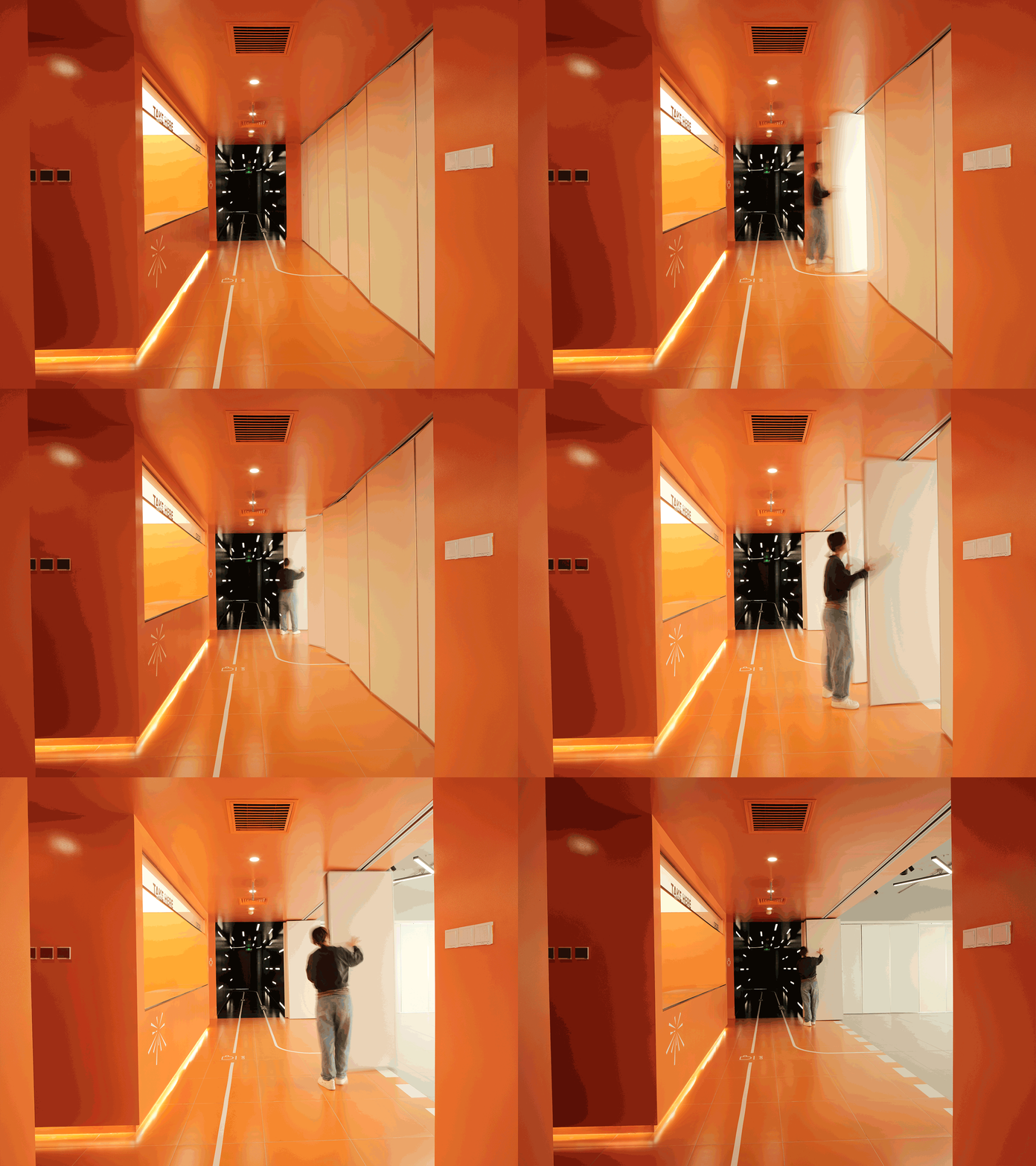
To meet the diverse needs of New Star Publishing House’s activities, Crossboundaries designed a transformable space, with the implementation of movable partitions. The layout allows the space to be easily reconfigured to accommodate a range of events. These reconfigurable zones— defined as S, M, L, and XL—serve various purposes, from small private meetings to large receptions or launches. The special S-zone, separate from the main space, is specifically designed for VIP meetings, providing a more exclusive atmosphere. The flexibility of the space maximizes functionality, enabling effortless transitions between activities without the need for major adjustments.

Space Navigation
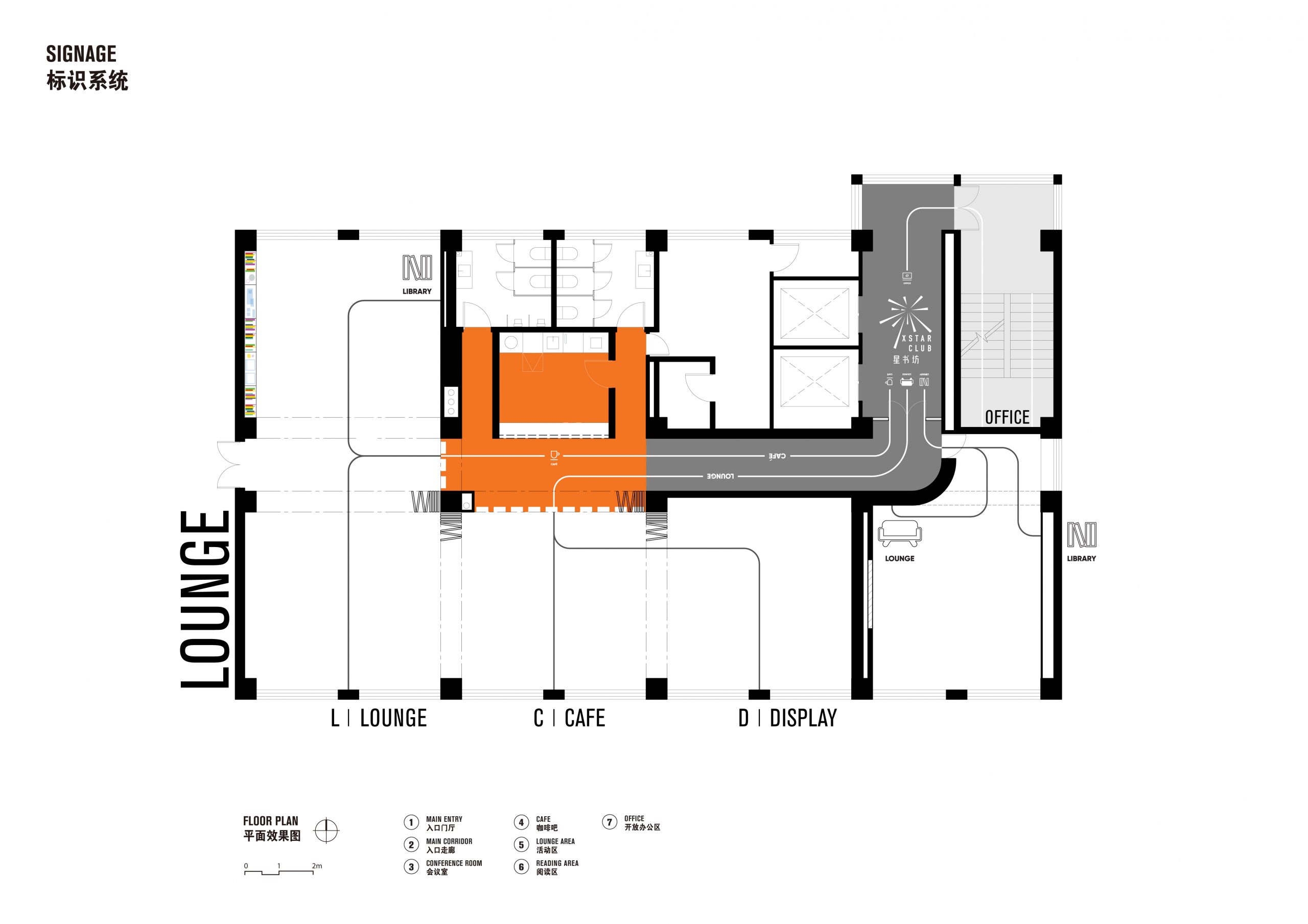
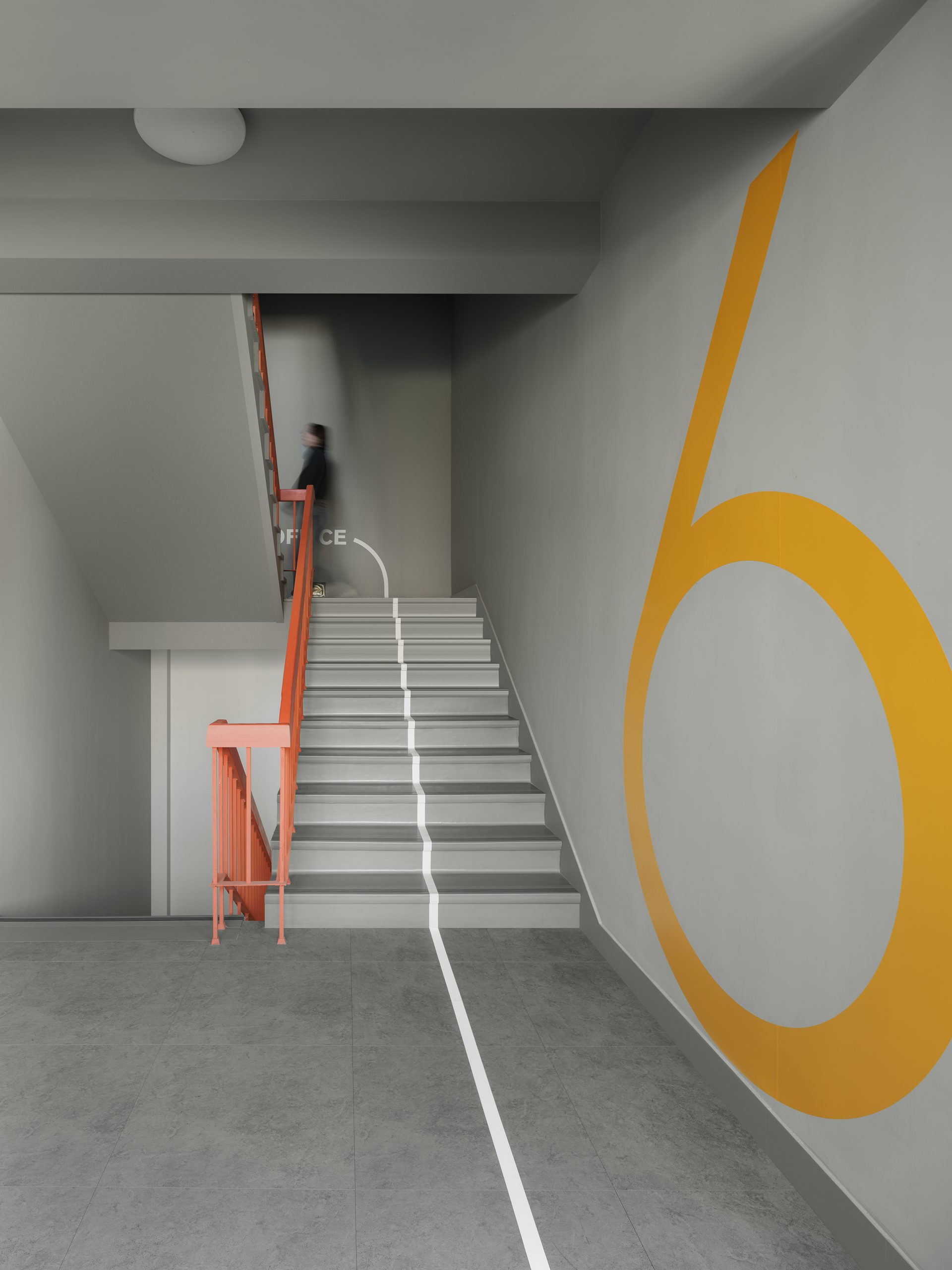
The design emphasizes clear and effective navigation. From the moment visitors step out of the elevator, they are led by distinct white lines on the floor, guiding them into different parts of the space. These lines continue throughout the area, extending onto walls and are complemented by simple symbols and text to help visitors navigate the programs easily. The wayfinding system is intentionally understated yet efficient, aligning with the minimalist design aesthetic while ensuring visitors can move seamlessly through the space’s various zones.

Distinctive Color Scheme for Guidance and Focus
The monochromatic color scheme is used intentionally throughout the space to create both an impactful entry as well as a gentle gradient of various functions. The contrast between the dark tunnel and lighter surrounding spaces enhances clarity and functional purpose; the rest of the space is composed of various shades of grey, similar enough to perceive the space as a whole, but just different enough to provide visual segmentation of the overall area. The coffee bar is highlighted in vibrant orange, providing an energetic focal point and marking it as the center of activity and interaction.

The Fusion of Culture and Innovation
The “Pulsating Space” blends culture and innovation, reflecting New Star Publishing House’s core values while reinterpreting it in a new system. The minimalist design embodies the publishing house’s philosophy of “words as points, images as lines, and paper as planes,” while embracing modernity and forward-thinking ideas. The combination of flexible design, visual contrasts, and intuitive navigation invites visitors to experience the cultural essence and innovative spirit of New Star Publishing House.
This multifunctional platform not only supports modern workspaces that incorporate social interaction but also represents the brand’s vision for the future—an ongoing exploration of creative possibilities, fueled by both tradition and innovation.

The design process stems from the overall concept of “less for more”. The implementation of new ways to use and experience the space is achieved with simple alterations of color, patterns and moving separation elements. The focus was put on highlighting the potential of the existing space and the innovation of program, through the least amount of intervention and cost.